If you have ever held two sea moss products side by side and wondered why one looks dense, sun-dried, and alive while the other seems overly uniform, you are already asking the right question: what is the difference between wild and farmed sea moss? The answer shapes everything from purity and mineral exposure to texture, preparation, and trust.
Sea moss is not just sea moss. Where it grows, how it is harvested, and how much human intervention is involved all influence the final product. For people building a daily wellness ritual around mineral replenishment, that difference matters.
What Is the Difference Between Wild and Farmed Sea Moss?
At the simplest level, wild sea moss grows naturally in the ocean, attached to rocks in its native marine environment. Farmed sea moss is typically cultivated by being tied to ropes or lines in controlled coastal areas and grown for easier harvesting and larger-scale production.
That may sound like a small distinction, but it creates a very different growing experience for the plant itself. Wild sea moss is shaped by real ocean movement, changing currents, natural sunlight, and the untouched mineral environment around it. Farmed sea moss is managed for consistency and yield. That makes it more scalable, but not always more desirable for people who care about origin, purity, and the integrity of the whole food.
This is where quality starts to separate. Wild harvesting is slower. It takes more effort. It depends on skilled divers and careful sourcing. Farmed sea moss is often easier to produce in volume, which is one reason it has become so common in the market.
Why sourcing changes the end product
Sea moss absorbs from its environment. That is one reason sourcing is not a side detail. It is the product story.
Wild sea moss grows in a less manipulated setting. It is exposed to open-water conditions, wave action, and the natural mineral exchange of the sea. Because of that, many wellness-focused buyers view wild sea moss as the more authentic and energetically complete option. It tends to look less uniform, with variation in shape, color, and structure that reflects where and how it grew.
Farmed sea moss is usually cultivated closer to shore or in designated growing areas designed for easier access. That can create a more predictable harvest, but predictability is not the same as purity. Depending on the setup, farmed sea moss may be more exposed to crowded growing conditions, more handling, and a more artificial growth pattern than sea moss found attached naturally in deeper ocean environments.
For a brand rooted in clean sourcing, this is the line that matters. No shortcuts. The ocean should shape the moss - not the convenience of production.
Wild sea moss usually looks and feels different
One of the easiest ways to notice the difference between wild and farmed sea moss is by texture and appearance.
Wild sea moss often has a firmer, more fibrous structure. Its branches can look irregular, with natural variation in thickness and tone. Depending on the species and how it was dried, the color may range from golden to deep purple or greenish hues. That variety is normal. It is part of what makes wild product feel real.
Farmed sea moss often appears more uniform. It may be puffier, softer, or smoother in a way that looks cleaner at first glance but can also signal a less natural growth pattern. In some cases, consumers mistake uniformity for quality because modern wellness marketing has trained people to expect everything to look polished. With sea moss, a little wildness is often a better sign.
That said, appearance alone is not enough. Drying methods, cleaning practices, and species differences also affect how sea moss looks once it reaches your kitchen. The point is not that every wild sea moss will look one way and every farmed sea moss another. The point is that natural variation is expected in truly wild material.
Mineral exposure and environment
People choose sea moss because they want more than a trend. They want nourishment from the sea - minerals, whole-food support, and a replenishing addition to daily life.
Wild sea moss is often preferred because it develops in a natural marine ecosystem without the same level of human control used in farming operations. Supporters of wild harvesting believe this gives the moss a richer environmental imprint and a more complete relationship to the ocean it comes from.
Farmed sea moss can still contain nutrients, of course. It is still sea vegetation. But there is a difference between something cultivated for production efficiency and something harvested from its native habitat with minimal interference. For buyers who care deeply about whole-food integrity, that distinction is not marketing fluff. It is the foundation of the purchase.
The deeper point is this: if your wellness routine is built on clean inputs, then origin is part of the benefit. You are not just buying a gel, powder, or dried ingredient. You are choosing the environment behind it.
Harvesting methods matter
Wild harvesting usually requires diving or hand collection in open ocean areas where sea moss grows naturally on rocks. This is labor-intensive and seasonal. It calls for local knowledge, patience, and respect for the ecosystem.
Farmed sea moss is designed to be easier to retrieve. Rope-grown setups allow growers to cultivate and collect larger amounts with more control. That efficiency helps supply mass demand, but it also changes the relationship between the harvester and the plant. Instead of gathering a naturally occurring marine resource, the process becomes closer to marine agriculture.
Neither approach exists in a vacuum. Farming can help increase supply. Wild harvesting can be more limited and more expensive. So the question is not just which one is available. It is which standard aligns with your values.
If you care most about cost and convenience, farmed may seem practical. If you care most about origin, minimal intervention, and a more uncompromised source, wild usually stands apart.
Purity, trust, and the middleman problem
The sea moss market has grown fast, and fast-growing markets attract shortcuts. That is why the wild versus farmed conversation is really also a trust conversation.
A lot of consumers are not just trying to identify the plant. They are trying to identify the truth. Was this actually wild harvested? Was it sourced directly, or passed through layers of distributors who know very little about where it began? Was it dried naturally, cleaned carefully, and prepared in a way that honors the ingredient?
Farmed sea moss is not automatically low quality, and wild sea moss is not automatically superior if the handling is careless. Preparation still matters. But when a product is both wild harvested and transparently sourced, it often gives people a clearer line of confidence. You know more about what you are putting into your body.
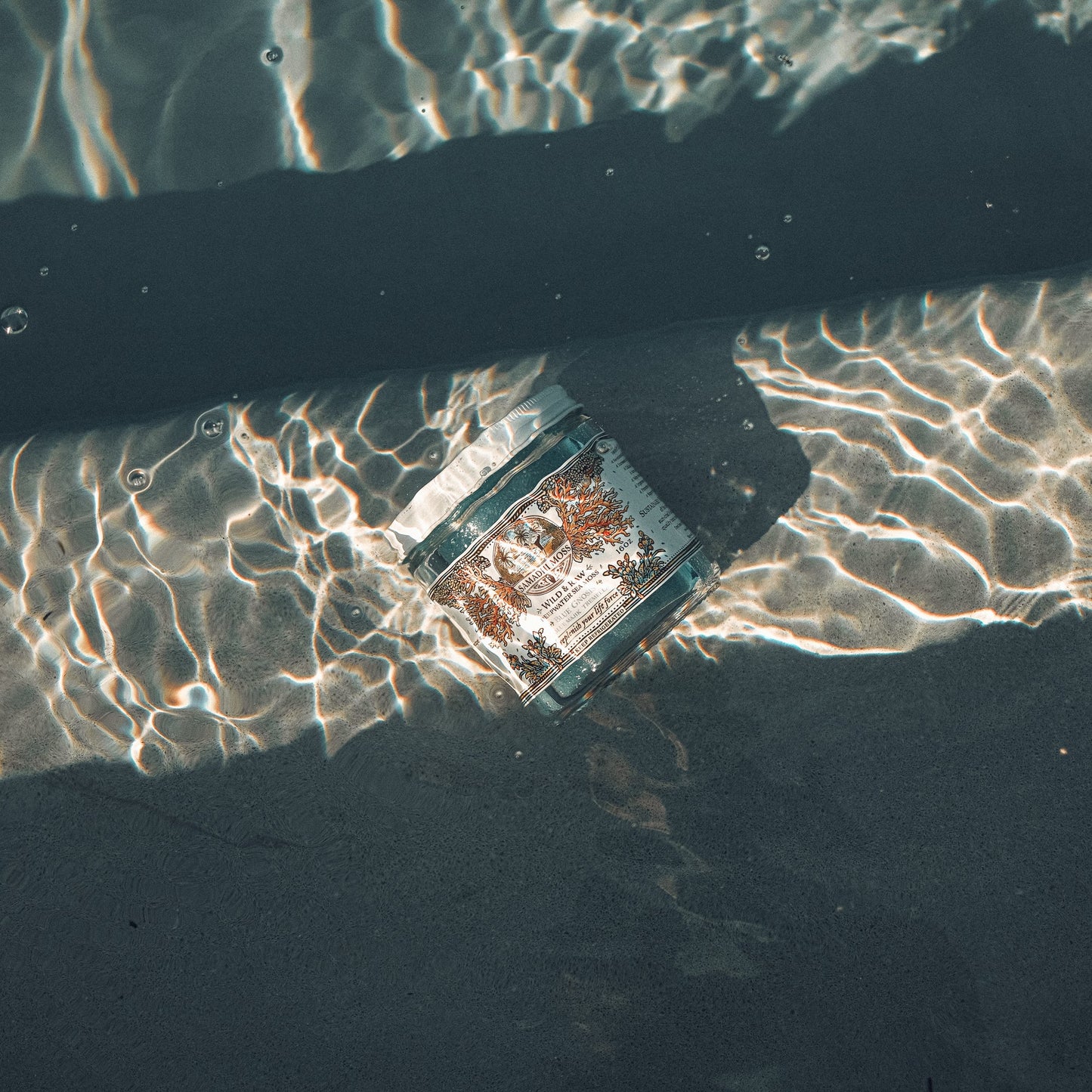
That is one reason brands like Samadhi Moss put so much emphasis on direct Belize sourcing and diver-harvested material beyond shore. The source is not a footnote. It is the standard.
Which one is better for your routine?
For most wellness-minded consumers, wild sea moss is the premium choice. It aligns with a more intentional way of living - fewer shortcuts, more respect for source, and a stronger connection to nature as it is.
Still, better depends on what you are optimizing for. If someone wants the lowest price and broad availability, farmed sea moss may be easier to find. If someone wants a sea moss product that feels closer to its original ocean state, wild is usually the better fit.
This is especially true if sea moss is something you use daily. Small differences in sourcing matter more when a product becomes part of your ongoing ritual. The cleaner and more transparent the input, the better you tend to feel about using it consistently.
How to shop with discernment
When comparing options, ask how the sea moss was grown or harvested, where it came from, and whether the brand clearly explains its process. Vague language is usually a signal. If a company talks around sourcing instead of stating it plainly, pay attention.
Look for specifics. Wild harvested from where? Collected how? Prepared in what kind of batches? Brands that prioritize integrity usually do not hide behind generic wellness claims. They tell you exactly why their sourcing is different.
Also remember that convenience and quality are not mutually exclusive. You can choose ready-to-use formats like gel or powder without lowering your standard, as long as the source itself is sound.
The real shift is learning to see sea moss as more than a label. Wild and farmed are not interchangeable terms. They point to different environments, different harvesting models, and different levels of intervention.
If your goal is to re-mineralize with something that feels clean, rooted, and alive, start with the source. The ocean leaves a signature on everything it grows.