A jar of sea moss begins long before it reaches your morning smoothie. Moss harvesting methods determine where the seaweed grows, how it is handled, what it encounters before drying, and whether the final product carries a clear origin story. For anyone building a daily ritual around mineral-rich sea moss, that difference is not a footnote. It is the foundation.
Not all sea moss is collected the same way. Some is grown on ropes near shore. Some is gathered from shallow coastal beds. Some is wild harvested by divers from deeper waters, then cleaned and prepared in small batches. Each route has trade-offs, but only one starts with the uncompromised rhythm of the open sea.
Why Moss Harvesting Methods Matter
Sea moss is a marine algae, not a single uniform ingredient stamped out in a factory. Its growing environment shapes its color, texture, saltiness, and natural mineral profile. Water movement, depth, sunlight, surrounding marine life, and the condition of the harvesting area all matter.
That is why sourcing claims deserve more than a quick glance. A product can be labeled sea moss while offering very little clarity about whether it was farmed, where it was grown, who collected it, or how long it passed through middlemen before it was packaged. Transparency is part of purity.
Wild harvesting is not a magic phrase on its own, either. Responsible harvesting requires knowledge of local waters, mature growth cycles, and the need to leave enough algae behind for the bed to regenerate. The strongest standard is not simply taking from nature. It is working with nature, carefully and consistently.
The Main Ways Sea Moss Is Harvested
Rope-Grown and Farmed Moss
Rope-grown sea moss is cultivated by tying fragments of algae to lines, nets, or floating structures, often in protected coastal water. This method can produce predictable volume and a steady supply, which is why it is common in the broader sea moss market.
Farming is not automatically poor quality. When it is well managed, cultivation may reduce pressure on wild beds and support local coastal livelihoods. Still, buyers should understand the difference between farmed material and sea moss that has grown freely in its natural marine habitat. Farming conditions vary widely, including water quality, density of the crop, proximity to shore activity, and the materials used in the growing setup.
Farmed moss may also look more uniform because it is grown for consistency. That can be useful for high-volume production, but uniformity is not the same as integrity. Ask where the farm is located, what species is grown, and whether the brand can clearly explain its process.
Shoreline and Shallow-Water Collection
Some collectors gather sea moss from shoreline areas or shallow reefs. This can be accessible and labor-efficient, especially where seaweed naturally accumulates close to land. But near-shore collection calls for extra scrutiny. Coastal water may be more exposed to runoff, boat traffic, waste systems, and heavy human activity.
There is also a simple quality question: was the moss living and attached when it was collected, or was it washed ashore after breaking free? Drift material can be legitimate in certain settings, but it is harder to verify its age, condition, and path through the water. It may have been exposed to sand, debris, or extended sun before collection.
For a wellness ritual built around clean daily nourishment, origin should feel specific. Vague phrases such as ocean harvested do not tell you enough on their own.
Wild, Diver-Harvested Sea Moss
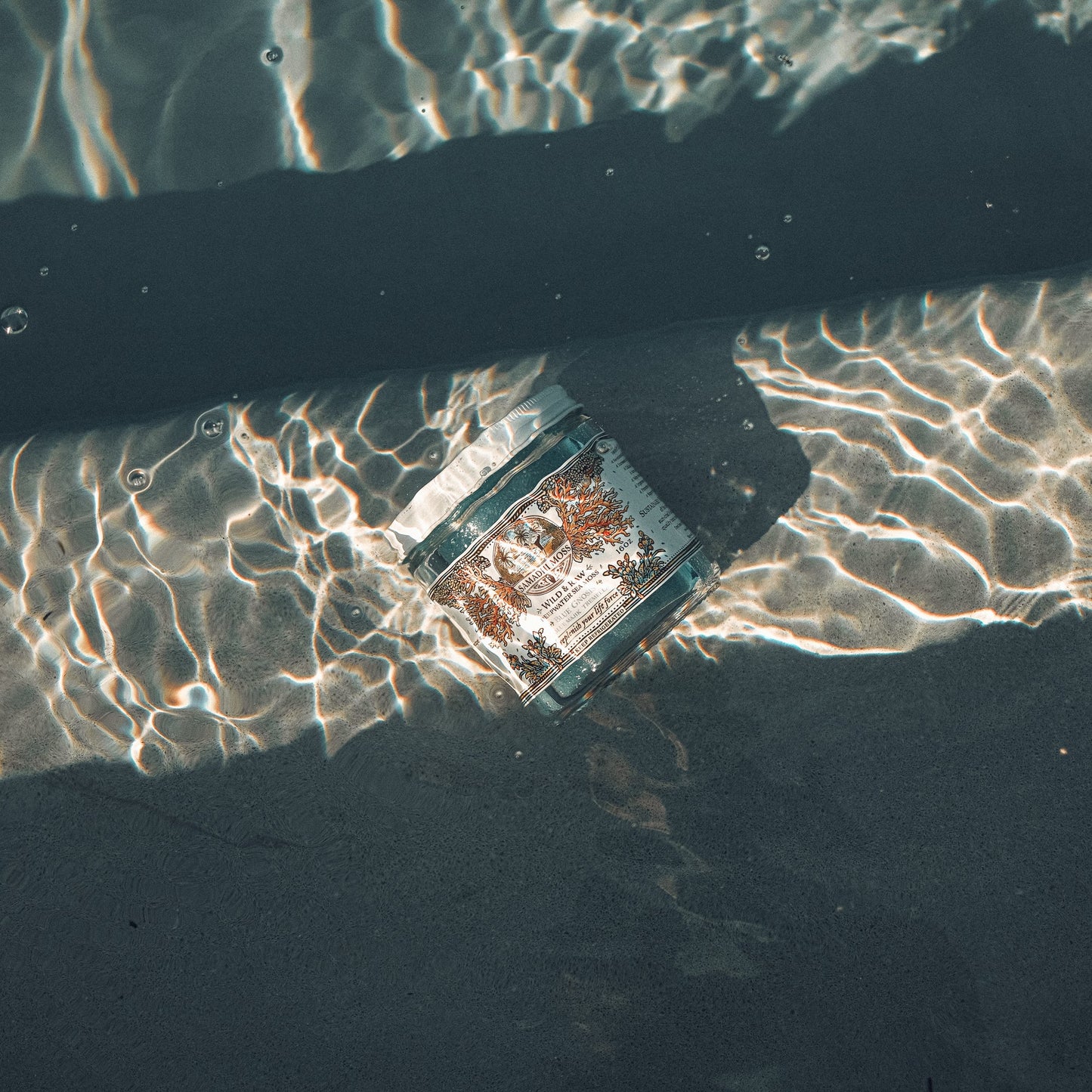
Diver-harvested sea moss is collected directly from underwater growth beds rather than pulled from ropes or gathered from the shore. In Belize, experienced local divers can travel beyond the shoreline to harvest sea moss from its natural environment, selecting healthy, mature growth while leaving the holdfast and enough material behind to support regrowth.
This approach is hands-on. It requires knowledge of the water, the harvest area, seasonal conditions, and the sea moss itself. It is not the fastest route, and it is not designed for careless volume. That is exactly the point.
When sea moss is dived for beyond shore, the process begins with a closer relationship to place. The harvest can be tied to a known region and a known community of divers instead of an anonymous supply chain. For Samadhi Moss, this direct Belizean sourcing reflects a clear standard: no shortcuts, no farmed material presented as something it is not, and no confusion about where your sea moss began.
Mechanical Bulk Harvesting
In some commercial seaweed operations, machinery is used to cut or collect large amounts of algae quickly. Mechanized harvesting can serve industrial applications, but it is a very different model from selective, small-scale collection. When equipment is used without restraint, there is a greater risk of disrupting surrounding habitat or removing too much growth at once.
For consumers, the practical question is traceability. Bulk supply chains often involve aggregation from multiple harvesters, processors, and exporters. By the time the sea moss is sold, the original waters and handling practices may be difficult to confirm.
What Responsible Wild Harvesting Looks Like
A responsible diver does not strip a bed bare. Sea moss needs a secure attachment point, often called a holdfast, to remain established and regrow. Selective harvesting takes mature sections while protecting that base and avoiding unnecessary disturbance to nearby marine life.
Timing matters, too. The best harvest is not simply whenever demand rises. Weather, water conditions, and natural regrowth cycles should guide collection. A supplier committed to the long term may have variable availability or small-batch differences in appearance. Those are not necessarily flaws. They can be signs that the product has not been forced into an industrial mold.
Handling after collection matters just as much as the harvest itself. Fresh sea moss should be sorted with care, rinsed thoroughly to remove natural salt and ocean debris, and dried or prepared in clean conditions. Overwashing, aggressive chemical treatment, or unclear processing can take a beautiful raw ingredient and turn it into something less transparent.
Color is another area where shoppers should stay curious. Wild sea moss can range from gold and tan to purple, green, or reddish hues, depending on species and growing conditions. A single color does not prove quality. What matters more is whether the brand can identify the source, explain the preparation, and show a consistent respect for the raw material.
Questions That Reveal a Better Source
When comparing sea moss, a few direct questions can cut through polished packaging:
- Is the moss wild harvested, farmed on ropes, or collected from shore?
- Is it harvested by divers from a known offshore area?
- Can the brand identify the country and local sourcing community?
- How is it cleaned, dried, and stored after harvest?
- Is it sold in small batches with a clear chain of handling?
Choose the Format That Fits Your Ritual
The harvest method is the first decision. The format you choose is the next. Ready-to-use sea moss gel offers convenience for people who want to add a spoonful to smoothies, teas, juices, or recipes without prep. It is ideal when consistency keeps your ritual alive.
Dried sea moss gives you more control. You can rinse, soak, blend, and prepare it your way, which makes it a natural fit for people who value a more hands-on connection to their ingredients. Powder can be practical for travel, quick shakes, or routines where storage space is limited.
No format is inherently superior for every person. Gel is simple. Dried moss is intentional. Powder is efficient. The shared standard should be a source you can trust before it ever becomes a scoop, spoonful, or blend.
Let the Source Set the Standard
Sea moss is often chosen for its role in a fuller wellness practice: nourishing meals, hydration, movement, rest, and steady daily replenishment. It does not need exaggerated promises to earn a place in that practice. Clean sourcing, thoughtful preparation, and a ritual you can sustain are powerful enough.
Choose sea moss with the same discernment you bring to the rest of your life. Look past the label, ask how it was harvested, and let a clear origin guide your next daily serving of lifeforce.