The conversation around Belize sea moss versus Irish moss often gets reduced to color or gel texture. That misses what matters most: sea moss is a common name, not a single universal ingredient. The waters it grows in, the species it comes from, and the way it is harvested and prepared all shape what ends up in your daily ritual.
If your goal is to re-mineralize with intention, look beyond the label. Ask where the moss was collected, whether it was wild harvested or cultivated, and how clearly the source can be traced. Purity begins long before a jar is filled.
Belize Sea Moss Versus Irish Moss Starts With Species
Traditional Irish moss usually refers to Chondrus crispus, a red seaweed native to the cool, rocky Atlantic waters around Ireland, Canada, and parts of northern Europe. It has been used in food preparation for generations because of its natural carrageenan content, which creates a notably thick, firm gel.
Belize sea moss is a broader market term for seaweed harvested in Caribbean waters near Belize. Depending on the harvest area and season, it may be a different seaweed species than traditional Chondrus crispus. That is not a flaw. It simply means the two are not automatically interchangeable, even when both are sold as sea moss.
This distinction matters because different seaweeds can vary in structure, taste, color, gel consistency, and naturally occurring mineral profile. They also grow in entirely different marine environments. A cold-water Atlantic moss and a warm-water Caribbean moss do not have the same origin story, and they should not be presented as if they do.
The honest answer is that neither is universally better. The better choice depends on what you value: a traditional cold-water variety with a dense gel, or a Caribbean-harvested moss selected for traceability, freshness, and a smoother fit in everyday recipes.
The Water Matters as Much as the Name
Seaweed absorbs compounds from its surrounding environment. That is one reason sourcing deserves more attention than trendy packaging or exaggerated claims. Coastal conditions, water movement, proximity to development, handling practices, and harvest methods all influence the integrity of the raw material.
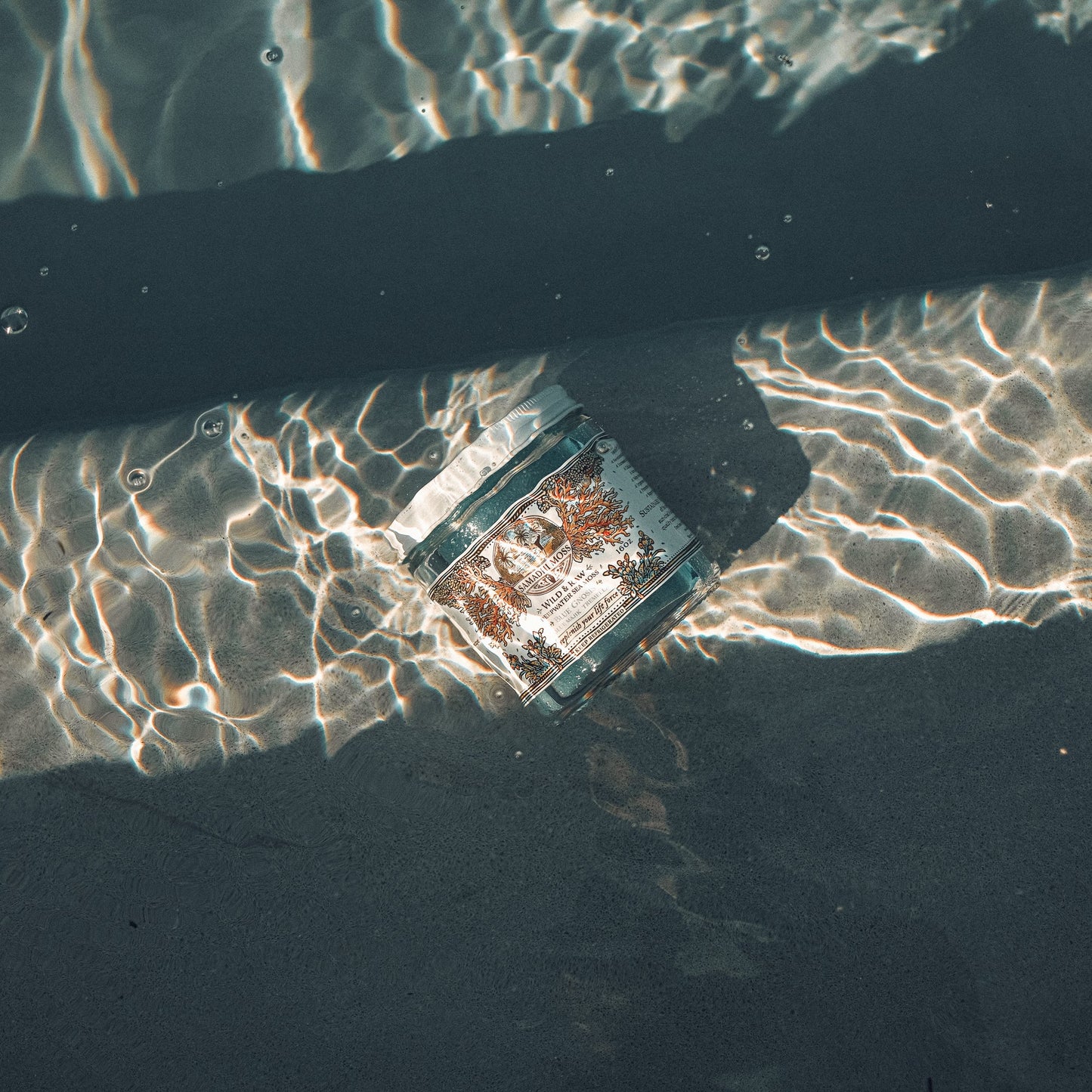
Wild-harvested Belize sea moss is often prized for its Caribbean origin and its connection to local divers who know the waters firsthand. At Samadhi Moss, the standard is dived-for beyond shore, never farmed, and sourced directly from Belizean divers. That approach is about avoiding shortcuts and maintaining a close relationship with where the moss begins.
By contrast, Irish moss may be wild collected from Atlantic coastlines or cultivated through commercial growing methods. Neither wild harvesting nor farming tells the complete quality story on its own. Responsible farming can be carefully managed, while wild harvesting can still be poorly handled if the supply chain is vague. The real question is whether a brand can clearly explain its methods, location, cleaning, and preparation.
A product simply labeled “Irish sea moss” does not automatically mean it came from Ireland. In the same way, a product marketed as “Caribbean sea moss” is not proof that it was genuinely harvested in Belize. Origin should be specific enough to verify, not used as a mood board.
Texture, Taste, and Daily Use Are Different
Traditional Irish moss is known for producing a thicker, more structured gel. Its flavor can be briny and ocean-forward, especially when minimally processed. For some people, that texture is exactly what they want in culinary uses such as soups, broths, puddings, or homemade plant-based desserts.
Belize sea moss often creates a lighter, silkier gel that blends easily into smoothies, juices, teas, sauces, and breakfast bowls. It can still carry a natural ocean taste, because real seaweed comes from the sea. Proper rinsing and soaking help soften that intensity without stripping the ingredient into something unrecognizable.
For a daily wellness practice, convenience is not a small detail. A sea moss gel you enjoy using consistently is more useful than a dried bag that sits untouched in the pantry. Ready-to-use gel can make your morning ritual simple: add a spoonful to a smoothie or blend it into a citrus drink. Dried moss gives you more control over soaking and batching. Powder can be the easiest option for travel or quick use.
No format is inherently superior. Choose gel for ease, dried moss for hands-on preparation, and powder when portability is your priority.
Do Not Judge Quality by Color Alone
Gold, purple, green, and deep red hues can make sea moss look visually distinctive, but color is not a standalone quality test. Natural color may reflect species, water conditions, sunlight, drying methods, and seasonal variation. A pale gold moss is not automatically more pure than a darker variety, and a deep purple color is not a guarantee of higher potency.
What should raise concern is a product that looks unnaturally uniform, smells heavily perfumed, or gives no meaningful explanation of its source. Sea moss is a whole-food sea vegetable. Variation is normal. Perfectly identical strands in every bag may be less reassuring than a product that looks and smells like something nature actually made.
Be equally cautious of sea moss that has been bleached, heavily processed, or flavored to disguise poor raw material. Clean preparation should respect the ingredient, not hide it.
Mineral Support Without the Miracle Language
Both Belize sea moss and Irish moss can contribute naturally occurring minerals and iodine to the diet. But mineral levels are not fixed. They vary by species, growing conditions, and batch. Claims that every sea moss product contains a precise, sweeping number of minerals are usually more marketing than meaningful nutrition guidance.
Iodine deserves particular attention. It supports normal thyroid function, but more is not always better. Anyone with a thyroid condition, those taking thyroid medication, people who are pregnant or breastfeeding, and anyone advised to limit iodine should speak with a qualified healthcare professional before making sea moss a daily habit.
Sea moss also should not be treated as a cure, a detox substitute, or a replacement for balanced meals. Its strongest place is inside a disciplined wellness rhythm: real food, hydration, movement, rest, and intentional supplementation. Replenish your life force with consistency, not hype.
How to Choose With More Clarity
When comparing Belize sea moss with Irish moss, start with the questions that a trustworthy seller should be ready to answer. What species or type of seaweed is being sold? What body of water did it come from? Was it wild harvested, farmed, or rope grown? Who harvested it? How was it cleaned, dried, and stored?
Then consider your own routine. If you want the traditional Atlantic ingredient and a firm gelling texture, authentic Irish moss may suit your kitchen. If you want a Caribbean-sourced moss with a smooth everyday feel, Belize sea moss may be the better fit. For many people, the deciding factor is not a contest between regions. It is confidence in the supply chain.
Look for clear ingredient statements with no fillers, artificial colors, or vague proprietary blends. Pay attention to freshness and storage guidance, particularly with prepared gels. A quality gel should be refrigerated, handled with clean utensils, and used within the stated window. Natural products deserve practical care.
A Ritual Worth Being Selective About
The sea moss worth bringing into your home is not defined by the loudest claim or the darkest jar. It is the one with an origin you can understand, preparation you can trust, and a place in your routine that feels sustainable.
Choose the waters, the harvest, and the standard behind your spoonful with care. That is how a simple daily blend becomes a more intentional form of nourishment.